AI for CMOs
Can AI help us understand customers without inventing insights?
SimplSolutions editorial team · Pipeline & customers · 4 min read
Published · Updated
AI-assisted editorial guidance. Jordan is a fictional campaign character, not a verified human author. Worked examples are illustrative unless explicitly identified otherwise.
AI can organize evidence, not create customers
AI can help sort permitted interview notes, identify candidate themes and prepare follow-up questions. It cannot establish what your customers believe by generating plausible customer opinions. Treat its output as an interpretation to inspect, not a substitute for evidence.
The useful deliverable is a traceable theme table: what participants said, how you interpreted it, contradictory evidence and the decision it might inform. This guide shows how to preserve that trail without inflating a small sample into a market claim.
Define the research question and permitted material
Start with a question such as why prospects hesitate after a demo or why new customers fail to complete onboarding. Decide what information is appropriate to use and who can access it. Do not upload identifiable or sensitive interview material to a new tool without the relevant permissions and review.
Keep the research purpose distinct from a sales goal. Asking the model to "find reasons customers need our product" invites confirmation bias. Ask it to identify both supporting and disconfirming evidence for candidate explanations.
Preserve the difference between quote and interpretation
| Field | What belongs there |
|---|---|
| Source reference | Permitted identifier linking to the original evidence |
| Participant statement | What was actually said, with context |
| Candidate theme | Your proposed interpretation |
| Counterevidence | Statements that do not fit the theme |
| Open question | What more you need to learn |
| Decision | Which action this might inform |
Do not silently paraphrase a statement into a stronger claim. "I could not find the current instructions" is not the same as "customers hate our platform." Retain uncertainty and the scope of the original observation.
Use a restrictive analysis brief
Ask the tool to use only the supplied permitted evidence, attach references to each proposed theme and state when a conclusion is unsupported. Require it to distinguish direct statements from analyst interpretation. Explicitly prohibit invented quotes, participants and percentages.
Have a researcher trace each accepted theme back to the source. Check whether context changes the meaning and whether one unusually detailed participant dominates the summary. A fluent synthesis can conceal a thin evidence base.

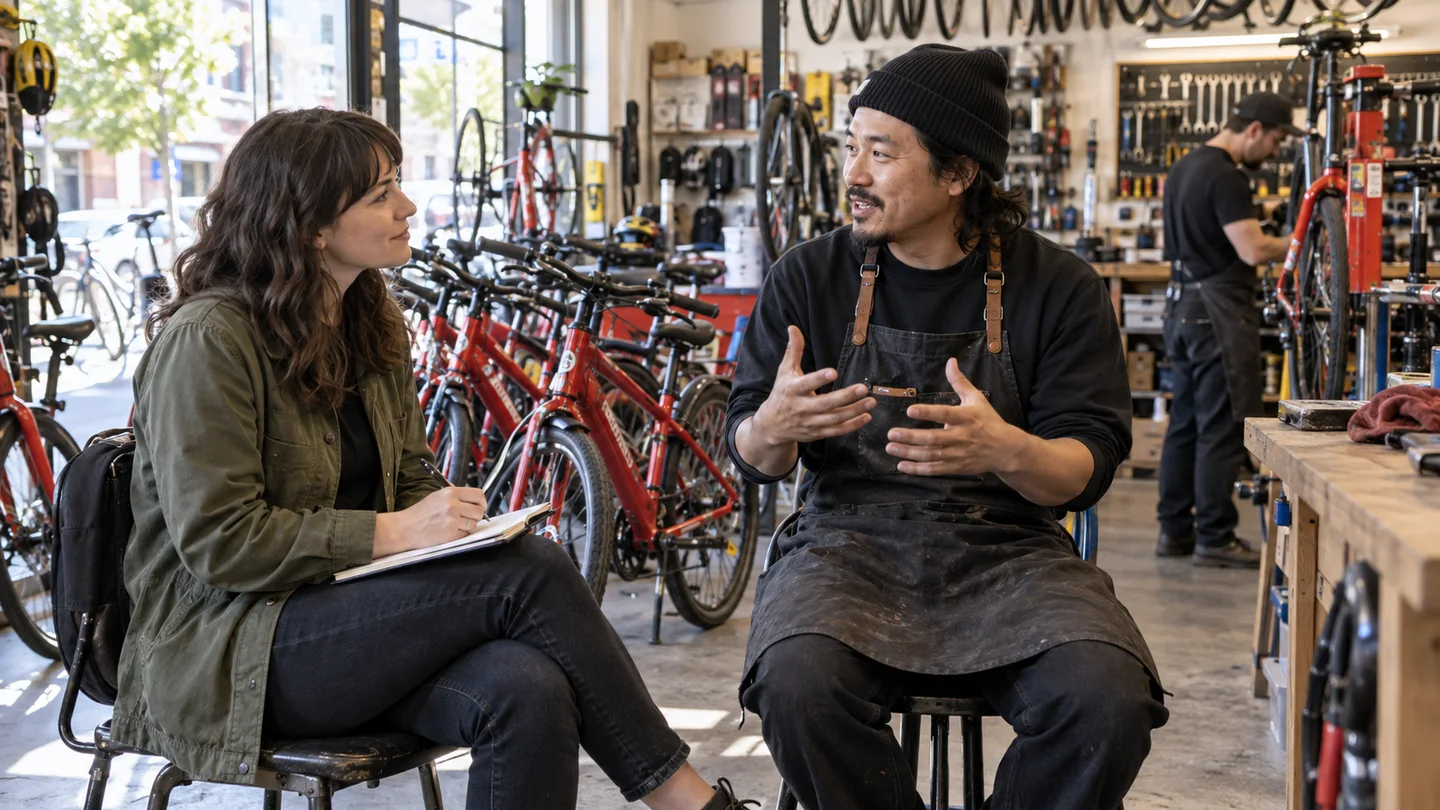
Illustrative editorial image, not a customer result.
Work through a small-sample example
Imagine eight permitted onboarding interviews. Three mention difficulty finding instructions, two mention waiting for an account owner and three describe different issues. A useful summary identifies those themes and recommends follow-up questions.
It should not claim that 37.5% of the market has an instructions problem. The arithmetic describes this particular sample, not population prevalence. Recruitment, customer type and timing may heavily shape what appeared.
The instructions theme might justify testing clearer navigation. The account-owner theme might need an operational fix. Combining them into "customers want more automation" skips the evidence and can lead to the wrong investment.
Seek the explanation that would change your decision
For each theme, ask what alternative explanation fits the same statements. People asking for a new feature may actually need clearer instructions, a different permission or a process change. Design follow-up questions that distinguish those possibilities.
Do not use AI-generated personas as confirmation that the interpretation is right. Synthetic role-play can help rehearse questions, but its responses are not customer research findings. Label it as preparation if you use it.
Turn themes into bounded tests
Choose one action with a measurable stage outcome. If customers cannot find a document, test whether a clearer path helps eligible users locate it. Do not immediately project higher retention or revenue from a navigation improvement.
Record the source evidence, the proposed action, the owner and what result would support or weaken the explanation. Keep the disconfirming evidence visible so the test can change your mind.
Your next research deliverable
Prepare one traceable theme table and three follow-up questions. Have the researcher check the references before using the synthesis in a strategy presentation. State sample limitations on the same page as the conclusions.
Read retention versus acquisition to connect findings to a decision. For help organizing approved information within a reviewed workflow, talk to SimplSolutions.